Epoxy Coverage Calculator
How many gallons of epoxy does your project actually need? Pick a brand, enter your area and pour depth — get gallons, the A/B mix split and a cost estimate, with coverage rates sourced from official datasheets.
The physics baseline
coverage = 1.604 ÷ thickness (in) · 100% solids · 1 gallon1/16″ per coat
25.7 sq ft/gal
seal coats, floor rollers
1/8″ per coat
12.8 sq ft/gal
flood coats, countertops
1/4″ per coat
6.4 sq ft/gal
build coats, small casts
The 1604-rule baseline every manufacturer's chart bends around: one gallon is 231 cubic inches, so thickness and area always trade off linearly. Real brands cover slightly less — their published rates are compared below.
Epoxy gallons quick table
Theory @ 100% solids · 1 coat · before wasteProject area down the side, thickness across the top — every cell is the gallons a 100%-solids epoxy needs for one coat. Add a second coat ×2, and round up ~10% for waste.
| Project area | 1/16" | 1/8" | 1/4" |
|---|---|---|---|
| 12 sq ft | 0.47 gal | 0.94 gal | 1.87 gal |
| 24 sq ft | 0.94 gal | 1.87 gal | 3.74 gal |
| 40 sq ft | 1.56 gal | 3.12 gal | 6.23 gal |
| 60 sq ft | 2.34 gal | 4.68 gal | 9.35 gal |
| 100 sq ft | 3.90 gal | 7.79 gal | 15.58 gal |
40 sq ft at 1/8" — one flood coat on a kitchen counter — is the 1.25-gallon cell that matches every manufacturer's own example. The full chart with brand-specific rates lives on the coverage chart page.
Why thickness eats coverage
What brands actually publish
official pages · Last Verified 2026-11-06TotalBoat — TableTop Epoxy
1:1 mix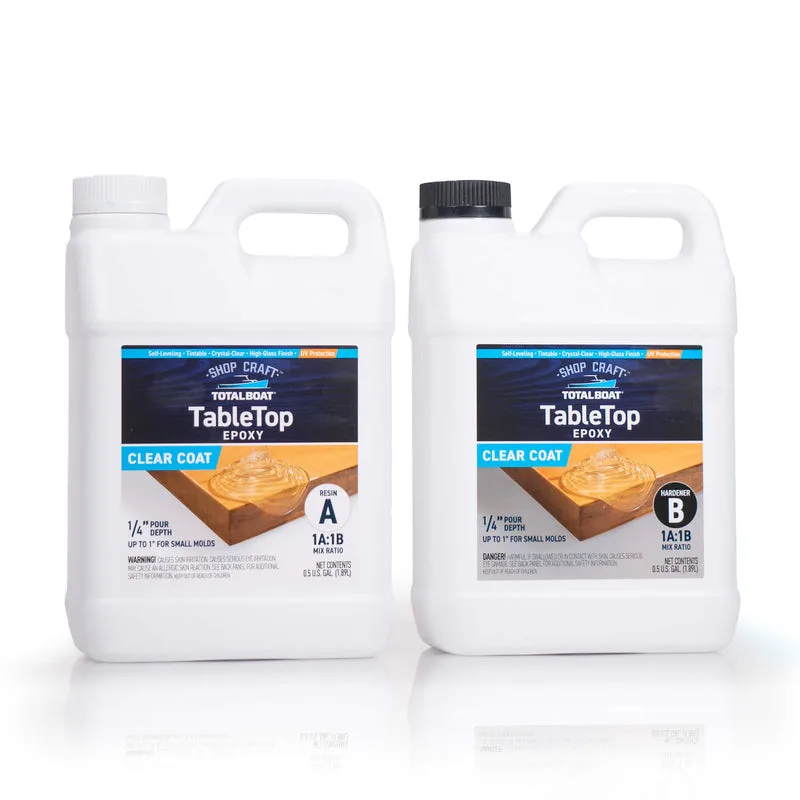
- flood coat @ 0.125"12.8 sq ft/gal
- flood coat @ 0.25"6.4 sq ft/gal
Source: totalboat.com · dual-verified on two official pages.
TotalBoat — ThickSet Cast + Coat
1:1 mix- pour @ 0.5"3.2 sq ft/gal
Published rates converted to per-gallon basis from kit coverage figures in the official TDS.
TotalBoat — Fathom Deep Pour
2:1 mix- pour @ 3" (derived)0.75 sq ft/gal
No sq-ft chart published; the 3-inch figure is the kit-coverage conversion, marked derived.
Primaloc Epoxy — Primaloc Bar & Table Top Epoxy
1:1 mix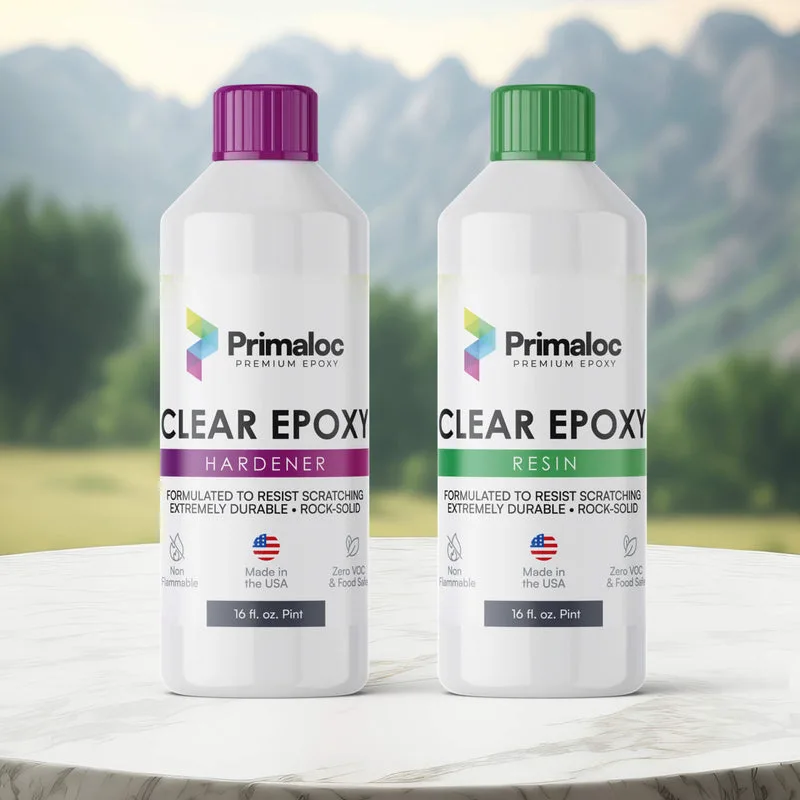
- flood coat @ 0.125"16 sq ft/gal
Source: primaloc.com · dual-verified on two official pages.
Primaloc Epoxy — Primaloc Deep Pour Epoxy
2:1 mix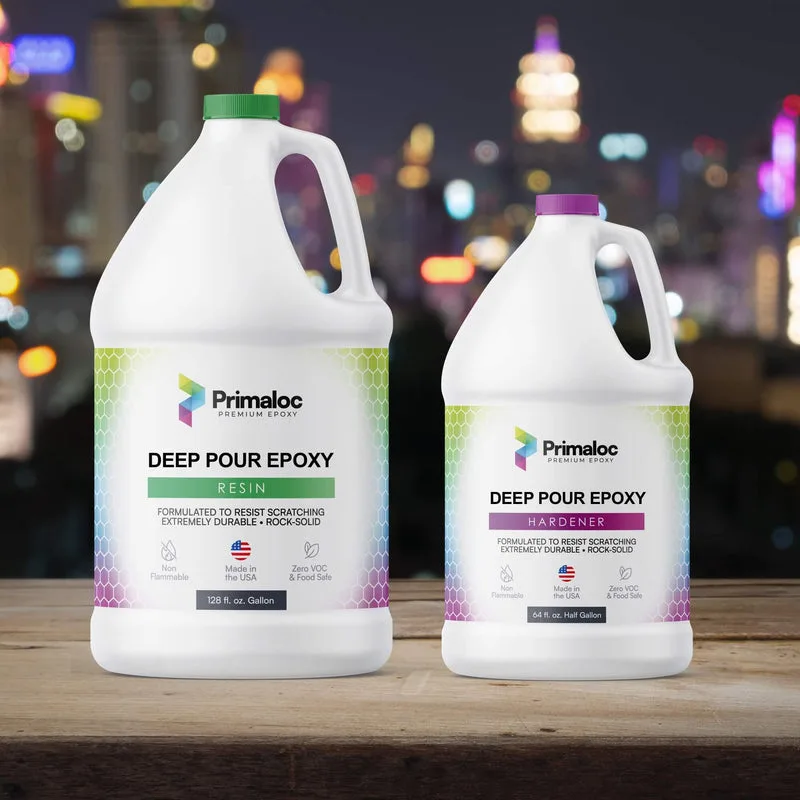
- pour @ 0.25" (derived)6.67 sq ft/gal
- pour @ 0.5" (derived)3.33 sq ft/gal
Published as kit coverage (1.5 gal kit); per-gallon rates on this site are derived arithmetic, marked derived.
KSResin — Liquid Stone Elite
1:1 mix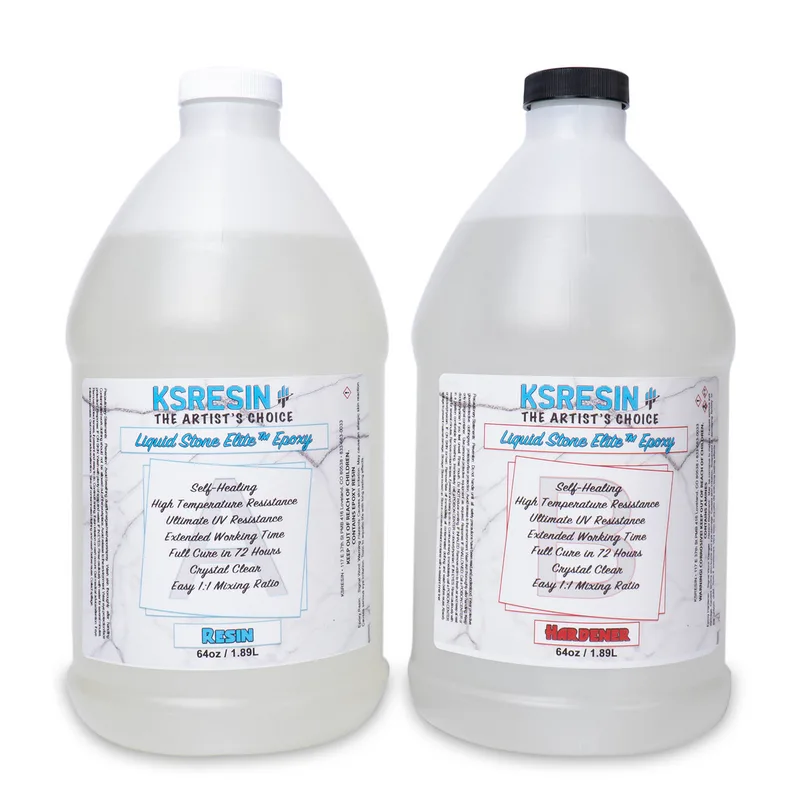
- coating (calculator basis) @ 0.0625" (derived)26.1 sq ft/gal
No published sq-ft chart; figure derived from the brand's own official calculator formula, marked derived.
Upstart Epoxy — Upstart Table Top Epoxy
1:1 mix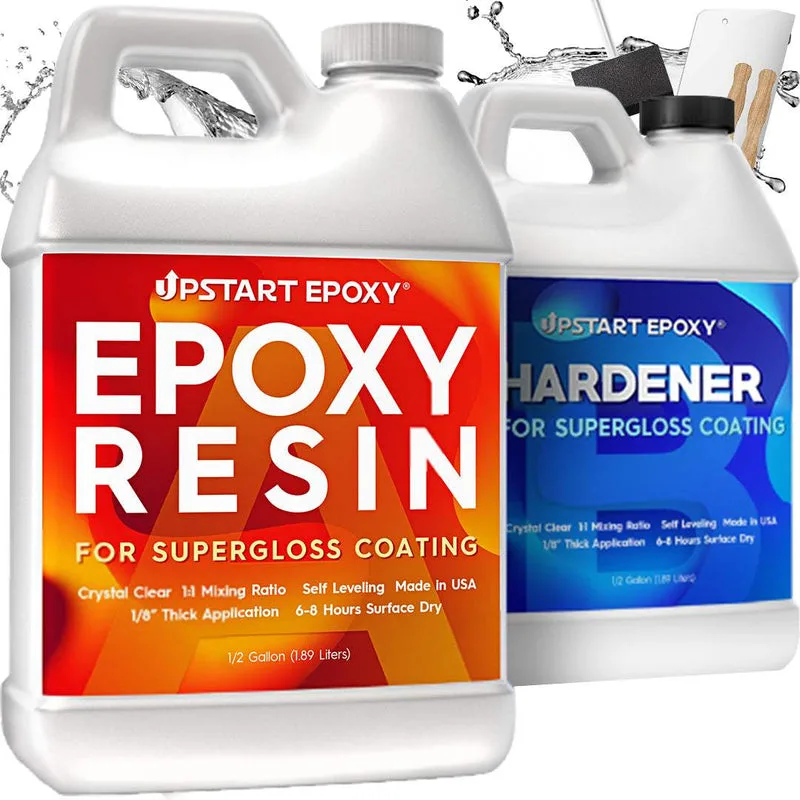
- flood coat (calculator basis) @ 0.125" (derived)12.8 sq ft/gal
- seal coat (calculator basis) @ 0.0625" (derived)25.7 sq ft/gal
No published sq-ft chart; figures derived from the brand's own official calculator, marked derived.
Brands that publish no coverage figure get the clearly-labeled theoretical baseline in the calculator instead of a made-up number — full detail on the brand comparison page.
What the same job costs by brand
official checkout prices · same gallons math for every rowEnter your area and thickness once — every brand's material cost comes back side by side.
How epoxy coverage math works
Turn thickness into coverage
One gallon is 231 cubic inches, so a 100%-solids epoxy at 1/8 inch covers 1.604 ÷ 0.125 = 12.8 sq ft. Halve the thickness, double the ground — the trade-off is always linear.
Apply the brand's own rate
Manufacturers publish slightly different rates because solids content and viscosity differ. Where a brand publishes a chart (like Primaloc's 16 sq ft/gal flood rate), the calculator uses it and cites the page; where it doesn't, the labeled 1604 baseline applies.
Gallons, split, cost
Gallons = area × coats × 1.10 waste ÷ coverage. The result splits into Part A and Part B at the datasheet mix ratio, rounds up to a real kit size, and prices the job at the brand's own checkout rate.
Go deeper
How much epoxy do I need?
The full walk-through: how area, thickness, coats and waste combine into one gallon number — with worked examples for counters, boards and floors.
Read the guide →Coverage chart (all thicknesses)
Every thickness against every brand rate in one table — plus a downloadable CSV for offline shopping math.
Open the chart →Epoxy per square foot
What one gallon really buys you at each thickness — in sq ft and m², with the unit math shown, not hidden.
See the unit math →Mix ratio calculator
Split any total volume into exact Part A and Part B amounts — volume and weight basis, the top cure-failure avoided.
Split my mix →Brands, spec by spec
Coverage rates, mix ratios, recoat windows and prices summarized side by side — comparable across brands, which brand sites never are.
Compare brands →River table pours
Deep-pour math is volume math: length × width × depth ÷ 231 — with layer caps and recoat windows that keep the cure from cracking.
Plan my pour →FAQ
How many square feet does a gallon of epoxy cover?
At the industry-standard formula, one gallon of 100%-solids epoxy covers 12.8 sq ft at 1/8 inch, 25.7 sq ft at 1/16 inch, or 6.4 sq ft at 1/4 inch. Real products cover slightly less once waste, surface profile and the manufacturer's own coverage chart are factored in — our calculator defaults to each brand's published rate where available.
How much epoxy do I need for a countertop?
For a typical 1/8-inch tabletop coat, plan on 1 gallon per ~12 sq ft of surface. A standard 8 ft × 2 ft kitchen island top (16 sq ft) needs about 1.3 gallons before waste — round up to the next kit size, because running short mid-pour is the one mistake you can't fix after the resin kicks.
How deep can I pour epoxy in one layer?
Tabletop epoxy: about 1/8 inch per coat. Deep-pour (river) epoxy: 2 inches per layer is the common datasheet limit, sometimes 1–4 inches depending on the product — deeper pours trap exotherm heat, which can crack, bubble or disc the cure. Multiple layers with a proper recoat window beat one thick pour.
What does the A:B mix ratio mean?
Epoxy is a two-part system: resin (part A) plus hardener (part B). A 1:1 ratio means equal volumes of each; a 2:1 deep pour means two parts resin to one part hardener. Mixing off-ratio is the top cause of soft, sticky cures — our mix ratio calculator splits any total volume into the exact A and B amounts.
Why do brands have different coverage rates?
Because solids content, viscosity and intended thickness differ per product. A 100%-solids tabletop epoxy and a lower-solids budget blend cover different areas at the same thickness — which is exactly why we publish each brand's official coverage figure next to the physics baseline instead of one blended average.
Is this calculator affiliated with any brand?
No. The site is brand-neutral: every coverage rate, mix ratio and price is captured from the manufacturer's own pages with a source link and a Last Verified date. Some links may be affiliate links, which never changes the numbers.